"Which agent framework should we use" is the wrong first question. The right one is "does this workflow branch, loop, or need a human checkpoint" — and the answer decides the framework for you, not the other way around.
Chains are for pipelines, graphs are for workflows
LangChain's chain abstraction is a straight line: step one feeds step two feeds step three. That's the right shape for a huge amount of real work — retrieve, summarize, format. It's the wrong shape the moment a step needs to loop back, branch on a condition, or pause for a person.
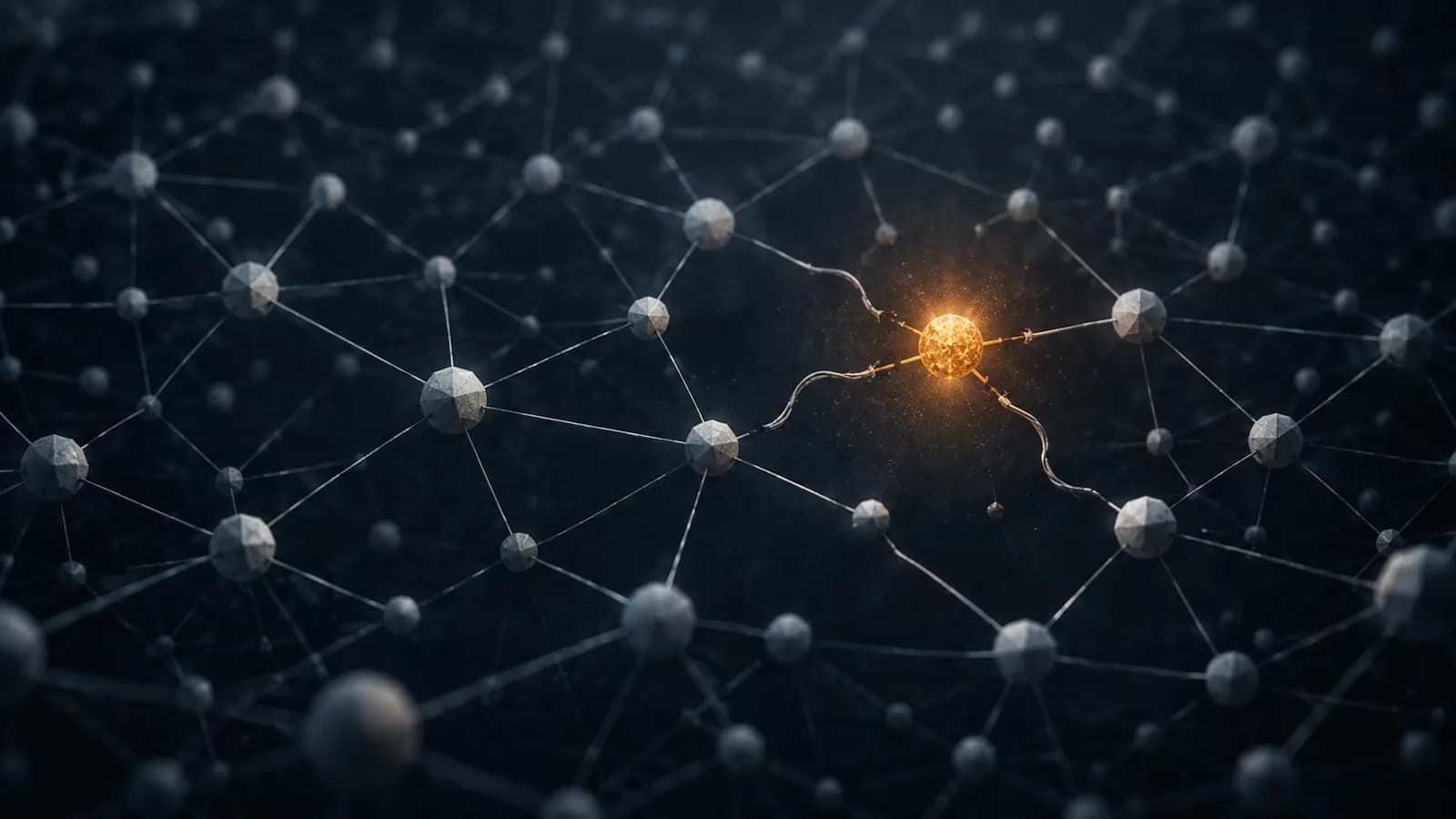
Chain vs graph, structurally
- Reach for LangChain when the workflow is genuinely linear — a fixed sequence of retrieval, transformation and generation steps that always runs the same shape.
- Reach for LangGraph when the agent needs to loop (retry a failed step), branch (different paths based on intermediate output), or pause for human approval mid-run.
- Reach for neither when the task is a single model call with structured output — a framework adds overhead a direct SDK call doesn't need.
State is the feature that actually matters
LangGraph's core idea is a typed state object that flows through nodes, with the graph able to route to different nodes based on what that state currently holds. That's what makes a genuine loop — "keep trying until this check passes, up to three attempts" — straightforward to express and, critically, to debug afterward.
A chain failure is a stack trace. A graph failure is a state snapshot at every node — you can see exactly what the agent believed at each step, which is the difference between guessing why an agent went wrong and knowing.
They're not actually rivals
In practice we use both in the same system more often than either alone: LangChain's well-tested integrations (retrievers, document loaders, output parsers) as the building blocks, wired together inside a LangGraph state machine that handles the control flow LangChain's chains were never designed to express.
“The question was never LangChain versus LangGraph. It's whether your workflow has a loop in it — the framework follows from that answer.”
Key Takeaways
- Pick based on shape: linear pipeline → LangChain; loops, branches, or human checkpoints → LangGraph.
- A single model call with structured output rarely needs a framework at all — reach for the SDK directly.
- LangGraph's typed state object makes agent failures debuggable as a state snapshot, not just a stack trace.
- The two aren't mutually exclusive — LangChain's integrations commonly sit inside a LangGraph-managed control flow.
Where to start
Sketch the workflow as a flowchart before writing code. If it's a straight line, you already know the answer. If you drew a loop or a decision diamond, that shape is telling you exactly which framework to open next.